

Say Goodbye To The Metallic Smell! Pure Titanium Tea Set With Hard-Core Performance
Say Goodbye To The Metallic Smell! Pure Titanium Tea Set With Hard-Core Performance
Recently, a variety of full-range pure
titanium tea sets have been launched, covering a full set of tea utensils such
as titanium teapots, tea cups, tea stoves, and portable tea sets, marking the
official decline of titanium metal from the military, medical, and aerospace
niche fields to the civilian tea drinking circuit on a large scale. Combining
material properties and the market, in-depth analysis of the actual impact of
the popularity of titanium tea sets on the titanium industry and the discovery stage,
only about 10% of the domestic high-end sponge titanium is used in the civilian
market, and the rest of the resources are concentrated in the industrial and
special manufacturing fields. Civilian titanium has always had a single
application scenario and low market penetration pain points. The rise of pure
titanium tea sets relies on the irreplaceable practical properties of the
material itself to adapt to the needs of the whole scene of daily tea drinking.
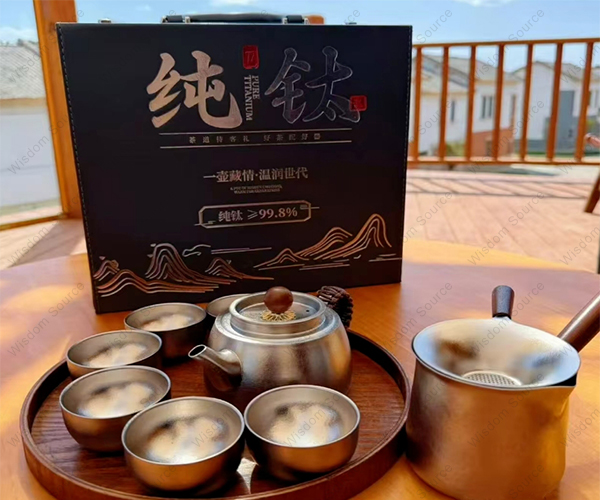
At the performance level, food-grade pure
titanium has multiple advantages. First, the chemical stability is extremely
strong, there is no precipitation of heavy metals in the acid-base environment,
and the un-coated design keeps the material stable when holding high-temperature
tea soups and acidic flower and fruit teas, which solves the common problem of
long-term use of stainless steel tea sets that are easy to taste and
precipitate impurities; second, the advantages of light weight are significant.
Tea sets of the same specifications, pure titanium material weighs only 56% of
stainless steel, which is suitable for multiple scenarios such as home, outdoor
camping, and business travel; third, it comes with natural antibacterial
properties, which can delay the deterioration of tea soup and restore the
original flavor of tea for a long time, which fits the consumer demand for
high-end tea.
Judging from the impact of the industry, at
the short-term level, a full set of titanium tea sets have landed, directly
broadening the consumption channels of civil titanium materials, activating the
production capacity of low- and middle-end titanium materials, alleviating the
pressure of overcapacity of sponge titanium and titanium sheet materials, and
optimizing the revenue structure of enterprises. In the medium to long term,
the project will force upstream manufacturers to adjust their production processes
and customize thin-walled titanium plates for tea sets, promote the iteration
of titanium deep processing technology, and lengthen the added value of the
industrial chain. At the same time, it breaks the market stereotype of titanium
as a “high-priced special material” and accelerates the popularization of civil titanium materials.
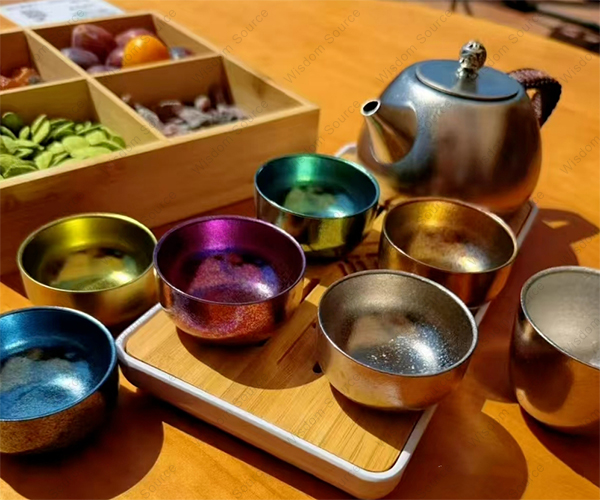
Combined with market feedback and analysis,
the current titanium tea set has been divided into two levels of market. The
entry-level titanium-coated tea set at the level of ¥100
and the pure titanium products at the level of hundreds to thousands of yuan
cover the public and middle- and high-end consumer groups, respectively, and
are suitable for the needs of tea friends at different levels. The market has
sufficient sinking potential. For the titanium industry, this cross-border tea
festival has important implications: the industry needs to abandon the inherent
thinking of heavy industry and light civilian use, rely on the common
properties of titanium materials such as corrosion resistance, lightweight, and
biocompatibility, and focus on the blue ocean of consumer goods such as tea
sets, kitchens, and outdoor water supplies.
Overall, titanium tea set is not a short-term net celebrity product, but a just-in-demand category spawned by consumption upgrading and material iteration. In the future, upstream titanium companies will need to link downstream tea ware brands, reduce deep processing costs, unify industry quality inspection standards, and crack the chaos of industries such as excessive prices and the impersonation of titanium alloys as pure titanium, so as to leverage the 100 billion-level consumer goods market and open up a new growth curve for the entire titanium industry.