

Research On The Heat Treatment Process And Mechanical Properties Regulation Of TA6 Biomedical Alloy
Research On The Heat Treatment Process And Mechanical Properties Regulation Of TA6 Biomedical Alloy
Because of its non-toxic element addition and excellent comprehensive mechanical properties, TA6 alloy has become an ideal candidate material in the field of surgical implants.In this paper, the influence laws of solution temperature, aging temperature and effective time on the micro-structure and mechanical properties of the alloy are systematically studied. The results show that the strength rises first and then declines with the increase of the solution temperature. The peak strength appears in the area slightly below the phase transition point, while the plasticity continues to decline; the strengthening effect is optimal when the aging temperature is 550℃, and the extension of the aging time can significantly improve the tensile strength but damage the plasticity; the isometric α phase is conducive to the improvement of plasticity, and the secondary striped α phase contributes significantly to the strength. This research provides data support for the engineering optimization of the heat treatment process of Ti-6Al-7Nb alloy.
As an emerging carrier of high-tech added value, the safety and reliability of biomedical materials are directly related to the success or failure of clinical applications.Although Ti-6Al-4V alloy is widely used in the field of orthopedic implants, the potential cytotoxicity of vanadium has caused long-term concerns. The Ti-6Al-7Nb alloy developed by Sulzer Medical Technology Company in Switzerland completely replaces vanadium with niobium. While maintaining the same strength, fatigue properties and corrosion resistance as Ti-6Al-4V, it significantly improves bio-compatibility. Since its clinical application in 1985, the cumulative global usage has exceeded 200 tons, and the domestic medical device industry is also in urgent need of localization. However, the mechanical properties of the alloy are extremely sensitive to the heat treatment process, and systematically mastering its organization-performance correlation mechanism is a key prerequisite for realizing engineering mass production.
1. Material Preparation And Test Methods
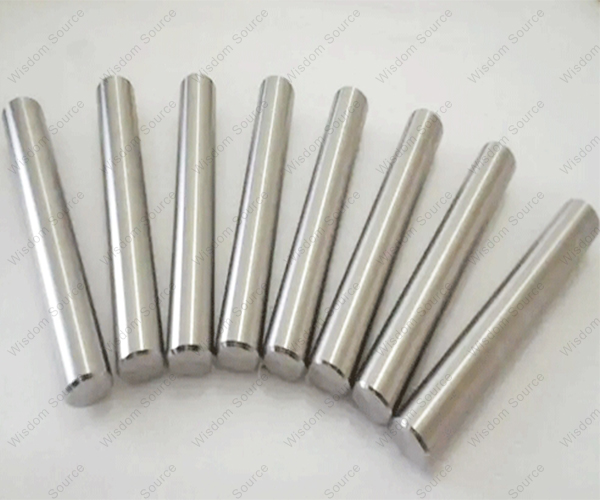
The raw materials are formulated according to the nominal composition of Ti-6Al-7Nb (Al 6%, Nb 7%, margin Ti), pressed and welded into self-consuming electrodes, and Φ520 mm ingots are obtained by two vacuum self-consuming smelting processes. The ingots are forged and rolled to prepare three kinds of bar blanks with different initial tissues. The heat treatment scheme includes: the solution treatment temperature range is 900~1080℃ (covering the α+β two-phase region and the β single-phase region), followed by aging treatment at 500~650℃; in addition, at a fixed aging temperature of 600℃, different aging times (2~8 h) are set to investigate the time factors. The mechanical properties test is performed according to the standard tensile method, and the micro-structure is observed by metallographic and scanning electron microscopy.
2. Results and Discussion
1) Effect of solution temperature on performance
Tests have shown that when the solution temperature rises from 900℃ to close to the phase transition point (about 1010℃), the tensile strength and yield strength are on the rise. This is due to the fact that the high temperature solution promotes more β-phase transitions, and after cooling, fine martensitic or secondary α-phase is formed, which produces a strengthening effect. However, when the solution temperature exceeds the phase transition point and enters the β single-phase region, the grain coarsens sharply, resulting in a significant decrease in strength, while the elongation and cross-section shrinkage continue to deteriorate with the increase of the solution temperature. This is due to the complete dissolution of the α phase at high temperature, the grain boundary migration is intensified, and the coarse β grains form Wei's tissue in the subsequent cooling, which significantly reduces plasticity. Therefore, the optimal solution temperature should be controlled at about 20~50℃ below the phase transition point to achieve a reasonable match between strength and plasticity.
2) The effect of aging temperature on micro-structure and strengthening
During the aging temperature rise from 500℃ to 650℃, the size of the isometric α phase increased significantly, but its volume fraction remained basically the same. This shows that temperature mainly affects the diffusion rate, causing the α phase to thicken, rather than changing the phase transition ratio.When aging at 550℃, the sample obtained the highest tensile strength (about 1050MPa) and yield strength (about 980MPa), and the strengthening effect was the best. The reason is that the secondary striped α phase precipitated at this temperature is finely and evenly distributed, maintaining a co-lattice relationship with the β matrix, resulting in strong precipitation strengthening. When the temperature rises above 600℃, the precipitated phase gradually grows and loses its co-lattice, and the strengthening effect weakens.
3) The influence of aging time on mechanical behavior
At a fixed aging temperature of 600℃, the aging time is extended (from 2 h to 8 h), and the tensile strength is significantly increased, but the yield strength does not change much, and the plasticity (elongation) decreases significantly. The typical characteristics of this “increase in strength and decrease in plasticity” show that the extension of aging time promotes more alpha phase precipitation, but the increase in the number of precipitated phases is also accompanied by the accumulation of interfacial dislocations, resulting in an increase in work hardening rate and an increase in tensile strength; the yield strength is mainly controlled by the grain size of the matrix and the strengthening of the solid solution, so the change is small. The deterioration of plasticity is related to the dislocation slip of the precipitated phase and the intensification of local stress concentration.
4) The correlation mechanism between organization and performance
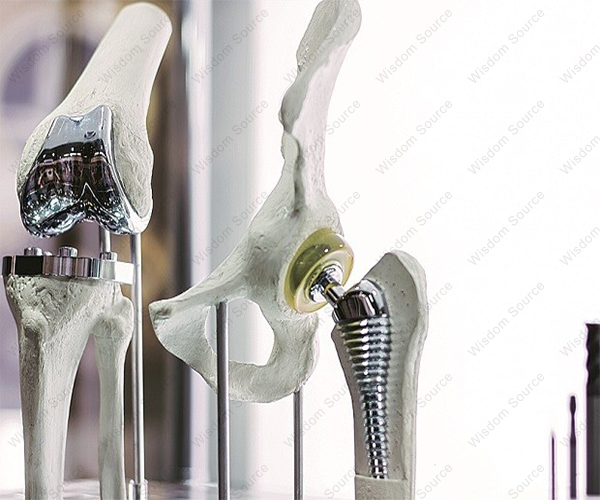
Taken together, the isometric α phase is conducive to improving plasticity and fracture toughness due to its small dislocation plug area and uniform deformation coordination ability; while the secondary striped α phase (mostly needle-like or slat-like) forms a high-density phase interface with the β matrix, which effectively hinders the dislocation movement, thereby increasing the strength. In actual production, the ratio of the isometric α phase can be controlled by adjusting the solution temperature, and then the morphology and distribution of the secondary α phase can be regulated by the combination of aging temperature and time to achieve customized matching of “strength-plasticity”. For example, for bone plate products that require high plasticity, it is advisable to use a lower solution temperature + a higher aging temperature to obtain more isometric α phases; for the femoral stalk with high bearing requirements, you can choose a solution close to the phase transition point +550℃ aging to pursue maximum strength.
3. Conclusion
1) The strength of Ti-6Al-7Nb alloy increases first and then decreases with the increase of the solution temperature, and the peak appears in the area below the phase transition point; the plasticity continues to decrease with the increase of the solution temperature.
2) The best strengthening effect can be obtained by aging at 550℃. The size of the isometric α phase thickens with the increase of the effective temperature, but the content remains basically the same.
3) Extending the aging time at 600℃ can improve the tensile strength, but it has a weak effect on the yield strength, and the plasticity deteriorates at the same time.
4) The isometric α-phase dominates the plasticity, and the secondary strip α-phase dominates the strength. Through the heat treatment process, the ratio and morphology of the two phases can be effectively regulated to meet the performance requirements of different implanted devices.
5) This research provides an experimental basis for the localization preparation of Ti-6Al-7Nb alloy and the determination of the heat treatment process window, which is of positive significance to promote the engineering application of domestic biomedical titanium alloys.