

Why Did The Titanium Rod Start To Develop Perforations As It Was Being Used?
Why Did The Titanium Rod Start To Develop Perforations As It Was Being Used?
With a
dense oxide film naturally formed on the surface, titanium exhibits excellent
corrosion resistance in most corrosion scenarios, and is the preferred material
for filtration and support components in chemical industry, environmental
protection and other fields. But many on-site operation and maintenance
personnel have encountered such confusion: obviously the titanium material was
selected, why did it still corrode and perforate?
Under
long-term and complex working conditions, titanium rods will still have
corrosion and failure problems, which not only greatly shortens the service
life of the equipment, but may also destroy the stability of the filtration
system and even cause safety hazards such as media leakage. Combined with
actual production, operation and maintenance experience, this paper
systematically combs the typical failure performance, core causes and
full-process process prevention and control plans of titanium rod corrosion,
and provides a practical technical reference for on-site rapid troubleshooting
and prolonging the service life of titanium rods.
1. Typical Failure Performance Of Titanium Rod Corrosion
The
corrosion damage of titanium rods does not occur evenly, and most of them
gradually expand with local damage as the starting point, and the probability
of failure in the chemical scene of highly corrosive media is significantly
increased.:
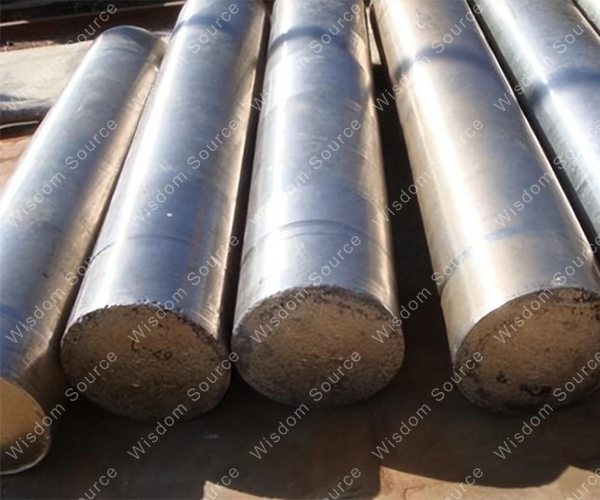
In the
initial stage: Pitting pits and local color changes visible to the naked eye
appear on the surface of the titanium rod, and dark spots and rust-colored
marks appear on the otherwise uniform metal surface. At this time, the
filtration accuracy and structural strength of the components have begun to
show a hidden decline.
Deterioration
stage: The pitting position gradually extends to form surface cracks, and the
corrosion continues to penetrate into the interior of the matrix, and
eventually local damage and perforation occur. The overall strength of the
titanium rod is greatly attenuated, and it is completely unable to withstand
the working load normally, and it completely loses its filtration or support
function.
2. Three Core Causes Of Corrosion Failure
The corrosion of titanium rods is not caused by the insufficient corrosion resistance of the material itself. Most failure cases can be traced back to the lack of control in the three links of material selection, working conditions, and operation and maintenance:
1)
Insufficient adaptability of the medium: The corrosion characteristics of the
medium under working conditions are not fully evaluated during the selection
stage. The material of the titanium rod selected does not match the corrosive
medium in actual contact. The passivation film on the surface of the titanium
material cannot resist the continuous damage of strong aggressive components
such as specific halogen ions, leaving hidden dangers of corrosion from the
root cause.
2) The
operating conditions of the use environment exceed the standard: The
temperature of the material in the production and operation process exceeds the
upper limit of the rated tolerance of the titanium rod for a long time, or the
system pressure is abnormally overloaded, which directly penetrates the
original stable passivation film on the surface of the titanium rod, and the
titanium matrix that loses the protection of the oxide film is exposed to the
corrosive medium, and the corrosion rate will be significantly accelerated.
3) Lack
of daily maintenance and control: After the titanium rod is operated online for
a long time, corrosive medium impurities and reaction byproducts will gradually
be deposited on the surface. If it is not cleaned up in time according to the
cycle, these impurities will form high-concentration corrosion micro-regions in
the local area, which will continue to erode the titanium rod matrix, and
eventually induce local corrosion to intensify rapidly.
3. The Entire Process Of Process Control And Solutions
In view
of the above-mentioned corrosion incentives, a simple and easy-to-implement
process control system can be used to curb the risk of corrosion and failure of
titanium rods from the source.:
1)
Selection and adaptation control: Give priority to the evaluation of the
corrosion characteristics of the medium before production, and replace the
titanium rod grades that are fully adapted to the working conditions of the
medium to ensure that the corrosion resistance of the selected material fully
covers the corrosion level requirements of the on-site medium, and resist media
erosion from the root cause.
2)
Control of working condition parameters: establish a ledger of system operating
parameters, strictly control the medium temperature and system pressure within
the rated allowable range of the titanium rod, prevent over-temperature and
over-pressure operation, and avoid man-made damage to the protective passivation
film on the surface of the titanium rod.
3) Operation and maintenance inspection and control: Formulate a regular surface inspection system. It is recommended to stop and check the surface state of the titanium rod every 1-3 months, focus on investigating stress concentration areas such as welds and elbows, and clean up the corrosive impurities attached to the surface of the titanium rod in time. Once early signs of failure such as pitting and microcracks are found during the inspection, the titanium rod will be disassembled and replaced immediately to completely prevent small failures from spreading into large-area failure accidents.