

Titanium Alloy: High-End Orthopedic Medical Core Application Material
Titanium Alloy: High-End Orthopedic Medical Core Application Material
In the
context of the rapid development of modern orthopedic clinical medicine, the
adaptability, safety and functionality of implant materials directly determine
the surgical effect of fracture repair, bone orthopedics, and joint replacement
and the patient's rehabilitation cycle. Compared with traditional stainless
steel medical materials, titanium and titanium alloys are highly adapted to the
physiological environment of human bones due to their unique mechanical
properties, excellent biocompatibility and stable corrosion resistance. They
have been widely used in various orthopedic implantation and repair scenarios,
and have become an indispensable core material for contemporary orthopedic
medical treatment.
1. The Unique Material Properties Are Adapted To The Needs Of Human Bone Implantation
Titanium
alloy can be used in orthopedic clinical applications on a large scale, and the
core stems from its exclusive mechanical advantages of fitting human bones. The
elastic modulus of pure titanium is only 53% of that of stainless steel, which
is closer to the natural bone modulus of the human body, which can greatly
reduce the stress shielding effect after orthopedic implantation.
Traditional
metal implants are too rigid and concentrated in force, which can easily cause
bone absorption and bone atrophy in the human body, and long-term use is prone
to loosening, displacement and other problems. The titanium alloy implant can
achieve uniform conduction of mechanical loads, allow the bones to share the
force normally, effectively protect the original bone tissue, accelerate bone
healing, and greatly improve the long-term stability of the implanted device. At
the same time, the passivation film on the surface of titanium is stable in
nature, corrosion-resistant, no metal precipitation, no rejection reaction in
the human body fluid environment, and has a high biosafety level, which meets
the stringent requirements of long-term in vivo implantation.
2. The Whole Scene Covers All Kinds Of Clinical Applications In Orthopedics
The
clinical application of medical titanium in our country started in 1972, and
the clinical diagnosis and treatment application of domestic titanium alloy
artificial bones and artificial joints was officially launched. In 1973, the
Beijing General Research Institute of Non-Ferrous Metals successfully developed
300 industrial pure titanium artificial femurs and hip joints and put them into
clinical practice to fill the gap in the localization and application of
domestic medical titanium joints. After more than 50 years of technological
iteration, titanium has now fully penetrated all fields of orthopedics,
fracture fixation, and joint replacement.
In bone
orthopedic and internal fixation applications, titanium alloy can be made into
spine orthopedic rods, intramedullary needles, intramedullary nails,
pressurized bone plates, bone nails and other core equipment, widely used in
spine correction, limb fractures, backbone injury repair and other conventional
surgery, suitable for most orthopedic fixation diagnosis and treatment
scenarios.
For
clinically high-incidence patella fractures, titanium-nickel memory alloy
materials show strong practicality. The bone concentrator made of 1.5 ~ 2mm
titanium-nickel alloy sheet processing relies on the unique shape memory
function of the material to achieve precise bone bonding and fixation. The
operation is simple and the operation time is short. Most cases can be
completed under local anesthesia, and the clinical promotion advantages are
significant. Relying on the research and development of the same series of
materials, the wave-shaped curved foot riding seam nails and titanium alloy
pressurized bone plates can form continuous and uniform compression fixation of
the fracture section, and are suitable for complex conditions such as dry
femoral fractures. The difficulty of surgery is low, the healing effect is
good, and the patient's trauma and pain are greatly reduced.
In the
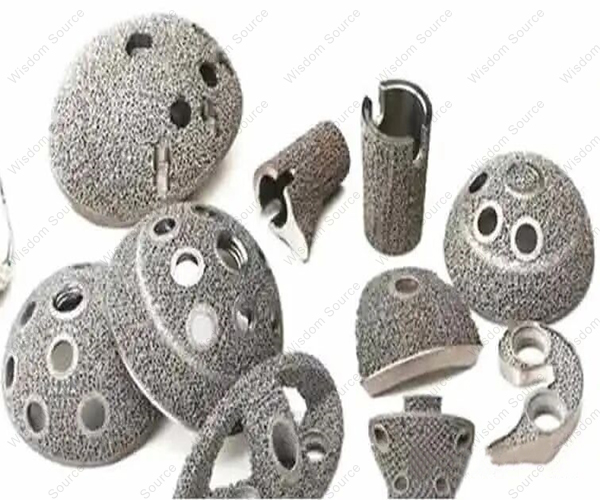
field of joint replacement, titanium alloy elbow joints, ankle joints, and hip
joints are widely used in human orthopedic repair surgery due to their
lightweight, high-strength, and mechanical fit to the human body. It
effectively repairs damaged bone and joint functions and helps a large number
of orthopedic patients restore their physical mobility.
At
present, the domestic titanium market for pharmaceutical use has a small base,
but it has maintained a high-speed growth rate of more than 30% for a long
time. It is a blue ocean field with strong growth in the new materials
industry.
3. Iterative And Continuous Upgrading Of Medical Titanium Alloy Grades, Implantation Safety
In the
early stage of the development of medical titanium materials, Ti-6Al-4V and
Ti-6Al-4V TITANIUM alloys have become mainstream orthopedic implant materials
with mature technology and stable performance. However, the alloy contains
vanadium, which has potential safety risks for long-term implantation in the
human body. Although it has not been expressly banned by international
authorities, the proportion of clinical applications has declined year by year,
and the industry as a whole is moving towards vanadium-free and high-safety
medical titanium alloy products.
A number
of new vanadium-free medical titanium alloys have been clinically implemented
worldwide. Among them, the Ti-6Al-7Nb alloy developed in Switzerland has been
mature and used in the field of medical implantation. Domestic medical titanium
materials have completed technological breakthroughs simultaneously. The
vanadium-free medical titanium alloy independently developed by Beijing General
Institute of Non-Ferrous Metals Research and Baoji Non-ferrous Metal Processing
Plant has successfully passed clinical medical trials with safe and reliable
performance. It won the First prize of Science and Technology of China's
Non-ferrous Metal Industry in 2001, marking a breakthrough in the autonomy of
high-end medical titanium alloys in China.
At the
same time, new medical titanium materials such as German Ti-5Al-2.5Fe alloy,
Indian Ti-5Al-1.5B alloy, and Ti-15Mo-5Zr-3Al alloy continue to enrich the
product system, and continue to raise the safety standards and performance
limits of orthopedic implant materials.
4. 3D Printing Technology Empowers And Expands The Boundaries Of Titanium Medical Applications
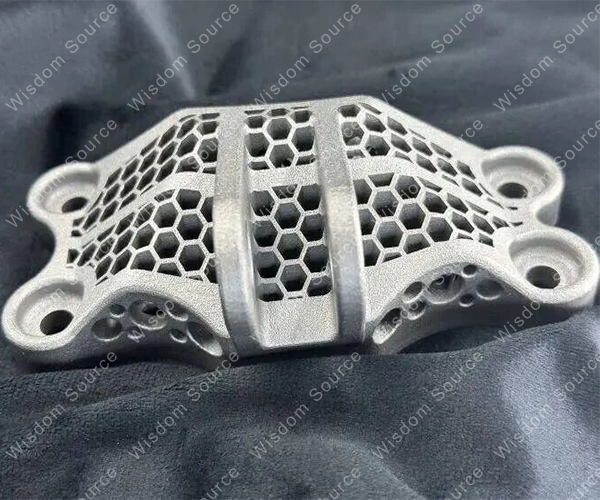
With the
rapid popularization of additive manufacturing technology, the application of
medical pure titanium and titanium alloys in precision orthopedic medicine has
been further broadened. At present, 3D printed medical titanium has been widely
used in high-end medical scenarios such as skull defect repair, dentition
defect repair, and hip replacement.
Compared
with traditional commercial standardized consumables, the stiffness of
3D-printed customized pure titanium mesh is more suitable for human body
structure, which can stably maintain the spatial shape of bones after surgery,
and provide good conditions for bone grafting and tissue healing. Personalized
customized titanium implants can fully fit the patient's bone characteristics,
effectively shorten the length of surgery, reduce the risk of postoperative
infection, and have outstanding advantages in diagnosis and treatment.
At this
stage, there are still some shortcomings in the mechanical and biological
properties of a single titanium alloy material. The industry can further
improve the material's bone binding ability, wear resistance and biological
activity through process optimization such as nano-coating and surface
modification, and continue to fill in the application shortcomings.
5. Industry Development Prospects
Precision
medicine, minimally invasive orthopedics, and long-term implantation are the
core development directions of modern medicine. Titanium and titanium alloys
have become the core substrate for orthopedic implantation with the
irreplaceable advantages of high biocompatibility, low stress shielding,
corrosion resistance and safety.
In the future, with the research and development of new safe titanium alloys, the upgrading of surface modification processes, and the in-depth popularization of 3D printing customized medical care, the application scenarios of medical titanium materials will continue to broaden and the permeability will continue to increase. Relying on the continuous quality improvement and expansion of the medical Blue Ocean track, the titanium industry will help domestic orthopedic medical technology upgrade and benefit patients while realizing high-quality innovation and development in the field of new materials.