

Full Analysis Of Titanium Plate Hot Rolling Process
Full Analysis Of Titanium Plate Hot Rolling Process
With its excellent mechanical properties, excellent corrosion resistance and low density characteristics, titanium plate has shown broad application prospects in many fields such as aerospace, chemical equipment, medical equipment, and marine engineering. The oxidized film formed on its surface is like a natural and durable and wear-resistant separator. The use of titanium seed plates can eliminate the separator, making it easy to peel off the plate, and eliminating the cumbersome process of pre-processing the seed plate, further promoting the widespread application of titanium plates.
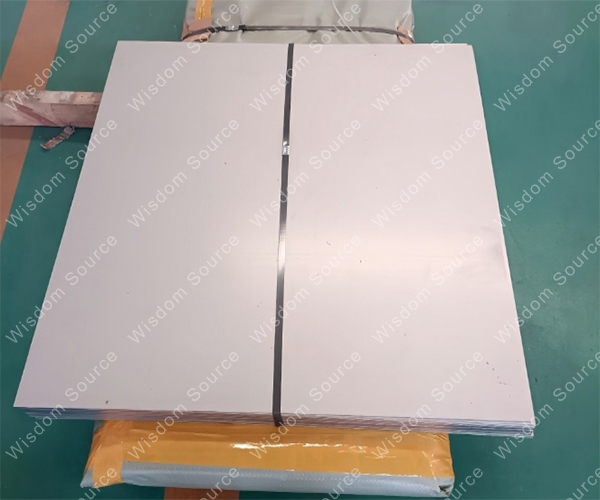
So, how to produce titanium plates that meet the requirements? Titanium plate is a general term, which covers hot-rolled plate, cold-rolled plate, titanium coil, titanium strip, titanium foil and other types. Today, we will focus on the production process of titanium hot-rolled plates.
Slab Making: The Transformation From Titanium Ingot To Titanium Billet
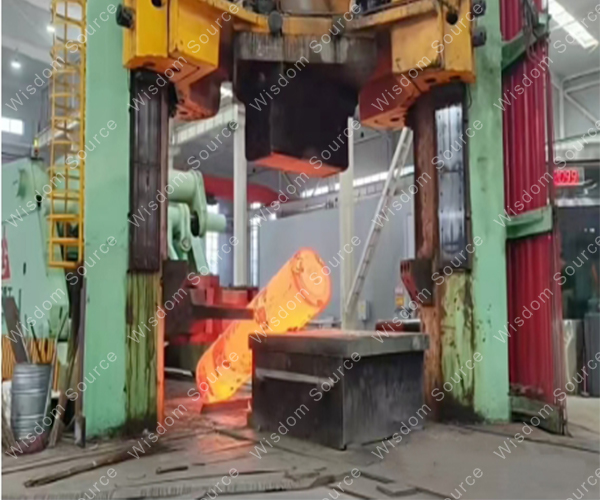
Titanium plates, like other titanium products, were originally derived from titanium ingots.However, the titanium ingots used to make titanium hot-rolled plates are giant titanium ingots, which can weigh more than 6-10 tons. These giant titanium ingots need to go through a forging process to become titanium billets with a size of 210x1100x8000mm. After the billet is made, its surface needs to be treated to remove the black oxide layer. This process usually uses a large gantry milling machine to mill out the oxide skin on all sides of the slab to ensure the surface quality of the slab.This step is essential to ensure the quality of subsequent titanium plates. The presence of a black oxide layer may affect the performance of the titanium plate during rolling and the surface quality of the final product.
Titanium Plate Rolling: Multi-link Precision Machining
1. Preliminary Understanding Of The Principle Of Hot Rolling
Hot rolling refers to rolling above the recrystalline temperature of the titanium billet.We can visualize this process as a common noodle press in northern families, imagining the titanium plate as a noodle, and realizing the forming of the titanium plate through multiple pressing and rolling.Of course, although the basic principles of the actual production of titanium plates are similar, the process is more complex and precise.Although this analogy is obvious, the parameter control and technical requirements in actual production are much stricter, and subtle changes in every link may have a significant impact on the performance of the final product.
2. Four Major Rolling Processes
1) Heating: Place the titanium slab in a suitable temperature environment, and the suitable heating temperature of the titanium slab is 900℃~1000℃. During the heating process, it is necessary to ensure that the time is long enough. Generally, the heating and heat preservation time should reach more than 4-4.5 hours to ensure that the titanium slab is evenly heated and prepared for subsequent rolling. Precise control of heating temperature and time is one of the key links in the hot rolling process. The temperature is too high or too low, the time is too long or too short, and the titanium plate may have quality problems, such as coarse grains and uneven organization.
2) Rough Rolling: The heated titanium blank is first descaled by high-pressure water to remove the iron oxide on the surface, and then enters the rough rolling mill for preliminary forming. Rough rolling usually uses reversible rolling methods, such as two-roll or four-roll mills. Through multiple rolling, the blank is rolled to the intermediate thickness. At this stage, widening rolling or shaping rolling may also be carried out as needed to adjust the width and shape of the blank to make it closer to the size requirements of the final product. The control of rolling force, rolling speed and other parameters in the rough rolling process plays a basic role in ensuring the forming quality of the blank and the smooth progress of subsequent finishing.
3) Finishing Rolling: After the intermediate billet is cut head and tail, it enters a multi-rack finishing mill, such as 7 four-roll mills. The finishing process adopts high-speed rolling, and the material is rolled to the final thickness by precisely controlling the amount of pressure. At the same time, the closed-loop control technology of the plate shape is used to ensure that the dimensional accuracy of the titanium plate meets the requirements of high standards and meets the strict specifications of the size of the titanium plate in different application scenarios. The finishing process is a key step in determining the final quality of titanium plates. Advanced plate shape closed-loop control technology can effectively reduce the thickness deviation and plate shape defects of titanium plates, and improve product pass rate and market competitiveness.
4) Cooling And Coiling: The finished titanium coil is quickly cooled to the coiling temperature through the laminar flow cooling system. This cooling process needs to be dynamically adjusted according to different grades of titanium materials and the final rolling temperature to optimize the performance of the material. After the cooling is complete, the titanium is rolled into rolls by the coiling machine. The final product may also need to be bundled, marked and other follow-up processing for easy storage, transportation and use. Titanium House mentioned in the report that the optimization of the cooling process is of great significance to improve the organization and performance of the titanium plate. Different cooling speeds and methods will lead to different organizational structures of the titanium plate, which will affect its mechanical properties and corrosion resistance.
Distinctive Characteristics Of Hot Rolling Process
1) Energy Consumption Advantages: During the hot rolling process, titanium has good plastic processing performance, low deformation resistance, and no obvious work hardening phenomenon. This reduces the energy consumption required for metal deformation, thereby achieving a lower level of energy consumption. Titanium House reported that this feature makes the titanium plate hot rolling process have significant economic advantages in today's increasing energy costs, which helps to reduce the production cost of enterprises and improve the market competitiveness of products.
2) High Production Efficiency: hot rolling usually adopts the method of large-scale ingot casting and large-pressure rolling. The production pace is fast and the output is large, which creates favorable conditions for large-scale production and can meet the large-scale market demand for titanium plates. Titanium House pointed out that large-scale production models can not only improve the production efficiency of enterprises, but also reduce the production cost of unit products through scale effects, and further enhance the competitiveness of enterprises in the market.
3) Optimization Of Organizational Performance: Through the hot rolling process, the cast state organization can be transformed into a processing organization. This organizational transformation greatly improves the plasticity of the material and enhances the performance and processing performance of titanium plates. The Titanium House report emphasized that the optimization of organizational performance is one of the core advantages of the titanium plate hot rolling process, which enables the titanium plate to better adapt to the application needs of different fields and expands the scope of application of titanium plate.
4) Performance Anisotropy: Due to the characteristics of the rolling method, the performance of the rolled sheet is anisotropic. On the one hand, there are obvious performance differences in the longitudinal, transverse and high directions of the material; on the other hand, there are deformation textures and recrystalline textures, resulting in obvious directivity in the punching properties.This feature needs to be considered and utilized in the application of titanium plates.
As the core technology of high-end metal material processing, the titanium plate hot rolling process has its core advantages in achieving the refinement and performance optimization of titanium alloy through precise temperature control (850-950℃) and multi-stage rolling.At present, this technology has broken through industry bottlenecks such as traditional rolling force fluctuation of ±5% and plate shape tolerance of ±0.1mm. However, in the face of the urgent demand for higher strength-to-toughness ratios of TA15, TC4 and other alloys in the aerospace field, the hot-rolling process of titanium plate still needs to continue to innovate and explore new process methods and technical means to further improve the performance and quality of titanium plate and expand its application areas.