

Titanium Alloy Lock Nut: A Solid Foundation For Modern Industrial Precision Fastening
Titanium Alloy Lock Nut: A Solid Foundation For Modern Industrial Precision Fastening
In the grand territory of modern industry, the fields of aerospace, high-end vehicles, marine equipment and precision machinery are like bright pearls, leading the forefront of scientific and technological development. Among them, although fasteners may seem small, they play an important role, and their reliability is directly related to the safe operation and service life of the equipment. Titanium alloy lock nuts, with their excellent overall performance, have become an indispensable core connector in high-end manufacturing scenarios, and have established a long-lasting and stable locking line of defense for key structures. Titanium House conducted an in-depth report on this, paying attention to the innovative application of this material in many fields.
1. The Material Is Excellent, Creating A Lightweight And High-Strength Body
Titanium alloy lock nuts are mostly made of Gr5 (Ti-6Al-4V) titanium alloy as the substrate, and are made by complex processes such as precision machining and heat treatment. This titanium alloy not only retains the natural texture of the metal, but also has excellent structural toughness. Compared with traditional steel and aluminum alloy nuts, titanium alloy has a significant advantage in density, only 4.5g/cm3, which is about 56% of steel. This means that under the same specifications, the use of titanium alloy lock nuts can achieve a weight loss effect of more than 45%.
In the aviation field, every gram of weight reduction means a reduction in fuel consumption and an improvement in flight performance; in the field of racing and high-end bicycles, lightweight is also related to speed and handling. While achieving lightweight, titanium alloy also has excellent specific strength. Its tensile strength can reach more than 900Mpa. Under the premise of lightweight, it can still maintain high strength and high rigidity, and easily meet the fastening needs under complex working conditions such as heavy loads and shocks.
2. Excellent Locking To Ensure Stable Operation Of The Structure
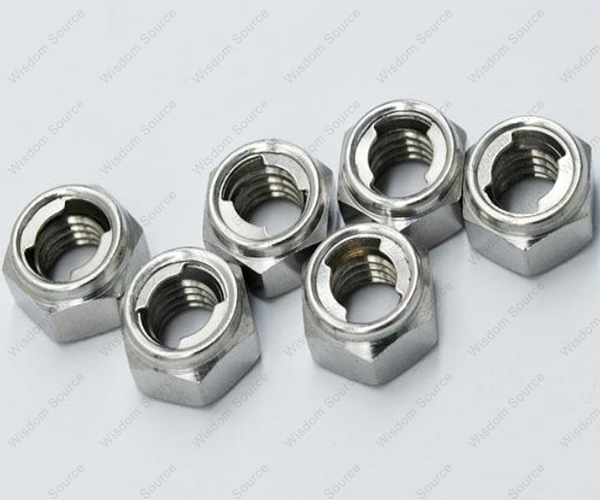
Locking performance is the core competitiveness of titanium alloy lock nuts. It adopts mature and reliable structural designs such as self-locking of the mouth, flange locking, and elastic anti-loosening. In the process of work, it relies on the elastic deformation of the material and the tight bite between the threads to form a stable and long-lasting locking force. Even under harsh working conditions such as continuous vibration and alternating loads, it can effectively prevent the occurrence of loosening, and can successfully pass the rigorous vibration fatigue test.
Compared with ordinary nuts, titanium alloy lock nuts do not need to be equipped with additional anti-loosening washers to achieve long-term self-locking function. This feature not only simplifies the assembly structure and reduces the number of parts used, but also greatly improves the overall reliability of the system and reduces the risk of equipment failure due to loose nuts.
3. Adapt To The Environment Without Fear Of Harsh Conditions And Challenges
The environmental adaptability of titanium alloy lock nuts is excellent. A dense oxide film will naturally form on its surface. This oxide film is like a strong armor, giving it strong corrosion resistance. Whether it is a marine environment filled with salt spray, chemical equipment with severe acid-base corrosion, or outdoor machinery with changeable humidity, titanium alloy lock nuts can be used for a long time without rust or failure, and their service life far exceeds that of traditional fasteners.
In addition, titanium alloys also possess excellent heat resistance and low-temperature toughness. Under high-temperature conditions, their mechanical properties remain stable and there is no significant thermal attenuation; in low-temperature conditions, they still maintain good toughness and will not become brittle due to low temperatures. Moreover, the non-magnetic property of titanium alloys enables them to perfectly adapt to scenarios where precision instruments, medical equipment, and electronic devices have specific requirements for magnetic fields and signal transmission, without causing any interference to the normal operation of these devices.
4. Widely Used To Help Upgrade High-End Equipment
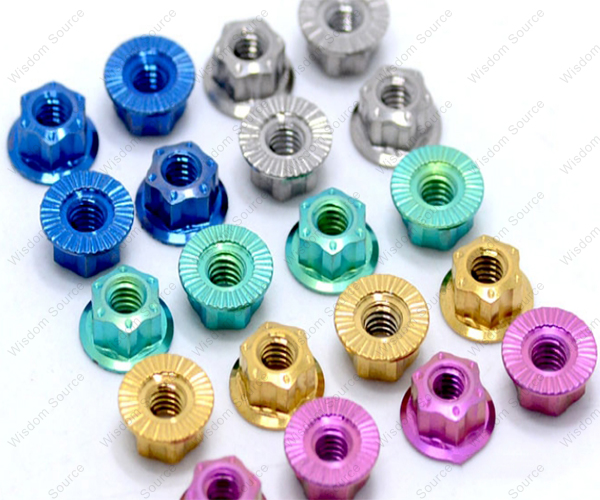
With the above-mentioned multiple performance advantages, titanium alloy lock nuts have been widely used in many high-end fields.In the aerospace field, it is used in the key connection parts of the engine and fuselage structure, providing a reliable guarantee for the safe flight of aircraft; in high-end automobile manufacturing, it is used in important parts such as chassis and wheels to improve the driving stability and safety of vehicles; in the field of ships and deep-sea equipment, it can resist the corrosion of seawater and high-pressure environments to ensure the long-term stable operation of equipment; in medical equipment, rail transit, precision machinery and equipment industries, titanium alloy lock nuts also play an important role in helping these industries develop in a higher quality and more reliable direction.
5. Broad Prospects, Leading The New Trend Of Industrial Development
With the rapid development of high-end manufacturing and new material technology, the machining accuracy and performance of titanium alloy lock nuts are also constantly improving. Nowadays, its specifications are more complete and adaptable, which can meet the diverse needs of different industries and different equipment. It is not only a simple fastener, but also an important symbol of modern industry's progress towards high efficiency, reliability and light weight.
Looking to the future, with the further popularization of the application of new materials, titanium alloy lock nuts will show their unique value in more key areas. It will continue to escort equipment safety, provide solid support for industrial upgrading, and promote modern industry to new heights.