

10.8 kg, 120 Kilometers! 3D Printing Titanium Alloy Makes Electricity "Light” Out Of The New Limit Of Battery
10.8 kg, 120 Kilometers! 3D Printing Titanium
Alloy Makes Electricity "Light” Out Of The New Limit
Of Battery Life
At a time when the two-wheeled electric
bicycle industry is generally caught in “stacking
batteries, punching configuration, and getting heavier and heavier”, Urtopia Titanium Zero, a 3D-printed titanium alloy concept car,
has pressed the weight of the vehicle to 10.8 kg, and at the same time ran out
of 120 kilometers of estimated battery life. In the past, this parameter was
almost a combination that the industry did not dare to touch easily.
For the titanium industry, its significance
has never been another high-end toy, but an iconic landing of titanium alloy's
deep penetration from aerospace and medical implantation to civilian
consumption scenarios. It combines material properties, manufacturing
technology and the real needs of users, and it has also opened up a previously
underestimated incremental track for domestic titanium companies.
1. Weight Loss Is Not A Gimmick, It Is A Rigid Pain Point In The E-Commerce Industry
At present, the curb weight of mainstream
electric bicycles is generally stuck at more than 20 kg, and some
long-endurance versions even exceed 30 kg. For every 1 kg increase in weight,
the user's experience when moving the car, parking, going downstairs, and
crossing the speed bump will take a next step; from the point of view of
technical logic, the weight gain of the vehicle will reverse increase the motor
load and compress the actual battery life, forming a vicious circle of “adding batteries when you are heavy, adding batteries is heavier”.
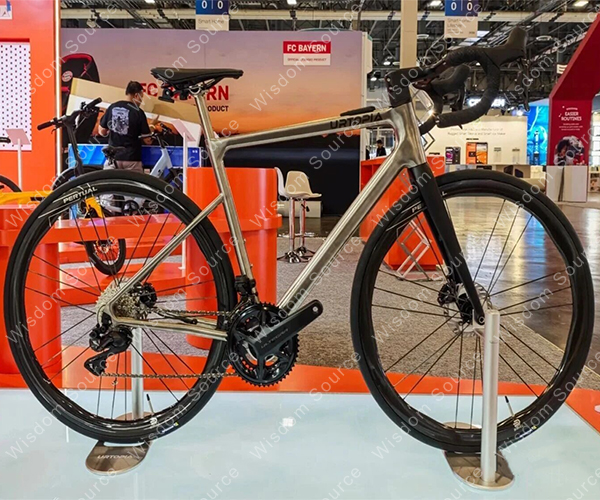
Industry data show that for every 10 kg
weight loss of electric vehicles, the battery life can be increased by about 15
to 20 kilometers. The reason why this 10.8 kg concept car can achieve 120
kilometers of battery life with the cooperation of a lightweight motor is not
by stacking large-capacity batteries, but by using a titanium alloy frame to
cut off the invalid weight from the root cause. The high specific strength
characteristics of titanium alloy allow the frame to reduce all excess
materials under the premise of ensuring torsional and impact resistance,
directly reducing the rolling resistance and acceleration energy consumption of
the vehicle.
For commuter users, 10.8 kg means that it
is no longer a burden to carry a car up and down the elevator and move into the
office with one hand; for the industry, it proves that “lightweight” is not a marketing selling
point in exchange for reducing structural strength, but a two-way breakthrough
in experience and performance is truly achieved through material upgrades.
2. 3D Printing Titanium Alloy: Cracking The Cost Dead End Of Traditional Craftsmanship
Titanium alloy has long been in the bicycle
field, but in the past, it has mostly stayed in the small-batch high-end road
bike market, and has never been able to extend to the electric two-wheeled
scene. The core bottleneck is not in material performance, but in the process
efficiency of traditional manufacturing: the process chain of pipe cutting,
welding, and subsequent machining is long, and the yield rate is low, which
ultimately pushes up the cost of a single piece, allowing the titanium alloy
frame to stay in the “luxury”
position for a long time.
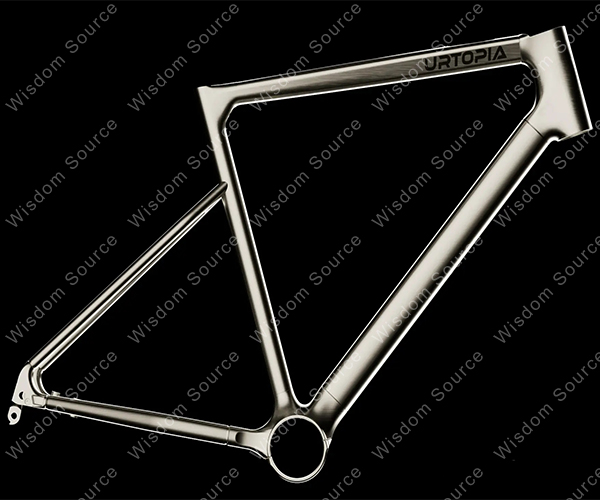
The 3D printing route chosen by the concept
car this time just bypasses the core shortcomings of traditional titanium alloy
manufacturing. Through the topological optimization design, engineers
accurately distribute the materials along the actual force trajectory of the
frame, the stress concentration area is locally strengthened, and the non-force
area is hollowed out to reduce weight, which not only completely eliminates the
weak points of stress concentration caused by traditional welding, but also
pushes the utilization rate of titanium to a whole new level. The complex head
tube and five-way structure that could only be completed in more than a dozen
processes in the past can now be delivered in one piece, and the prototype
iteration cycle is greatly compressed.
Of course, to achieve large-scale mass
production of titanium alloy 3D printed frames, it is still necessary to chew
off the hard bones of powder cost control, printing process consistency,
residual stress regulation and surface post-treatment. It will not fully
replace the carbon fiber and aluminum alloy frame in the short term, but it has
established an irreplaceable position in the high-end segment of the track.
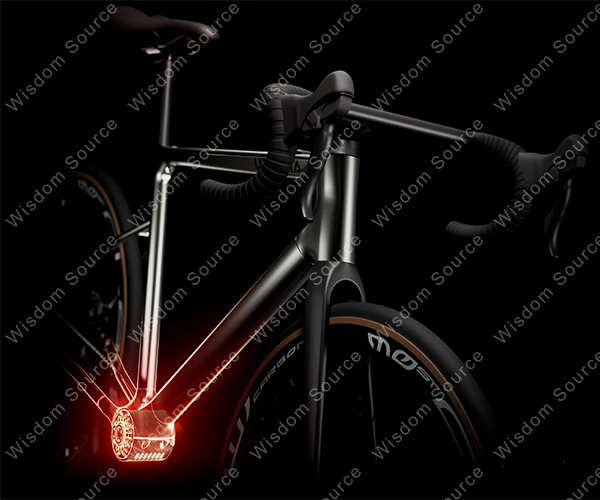
The true value of titanium alloy 3D printing has never been to build a “10.8 kg, 120 kilometers” parameter gimmick concept car, but to make the material technology that was once high above slowly become a daily experience that ordinary people can touch on the wheel. This two-wheeled travel revolution set off by lightweight has just begun.